Trike feels like it wants to lift a wheel? What track width and seat height explain
How track width, center of gravity height, speed and road camber decide whether a trike keeps three wheels down, and how to test a candidate on a slope before buying.
Choosing stable pedal and pedal-assist cycles for adults whose balance on two wheels has become unreliable, including delta and tadpole trikes, low-step frames and semi-recumbents
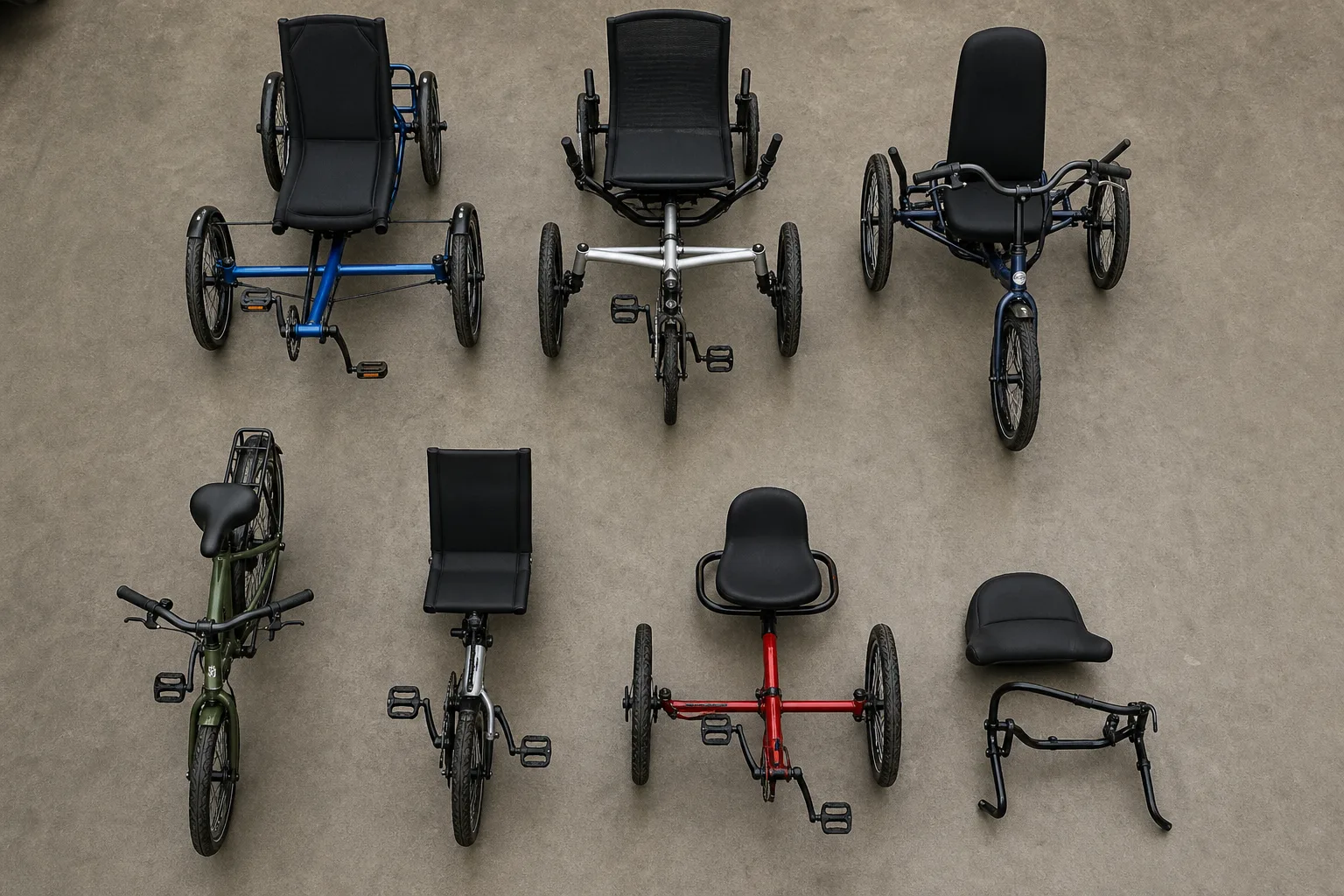
Stability in a turn depends on how half the distance between the wheels compares with the height of the rider's mass above the ground. Wider wheels and a lower seat both raise the tipping threshold.
A rider who had been off two wheels for a year came back from a first tadpole test ride reporting that the machine had tried to tip at a driveway apron taken at maybe eight miles an hour. Nothing lifted. The inside front wheel went light, the steering went vague for half a second, and that was enough to end the ride. What she felt is the ordinary physics of a three-wheeled vehicle in a turn, and it is entirely predictable once the two numbers that govern it are on the table: how far apart the wheels sit, and how high the rider's mass sits above them.
The two numbers that decide everything
A trike in a corner is pushed sideways by cornering force acting at the center of mass, which on almost every adult trike is the rider, not the frame. That sideways push is resisted by the weight of the machine acting down through the tire contact patches. The relevant comparison is the ratio between half the track width and the height of the center of mass. Wider track, lower seat, more margin. On a typical tadpole with a track around thirty inches and a seat base ten or twelve inches off the ground, that margin is generous. On a delta with a taller upright seat and a similar track, it is noticeably smaller, and the difference is felt in exactly the situations that matter.
Speed, radius and why parking lots surprise people
Cornering force rises with the square of speed and falls with the radius of the turn. Doubling speed through the same curve quadruples the sideways load, which is why a rider can take a broad sweeping bend at fourteen miles an hour without a flicker and then feel the machine go light at seven in a tight parking lot U-turn. Tight and slow is not automatically safe. The turns that catch people are the small-radius ones taken with a little more speed than intended: driveway aprons, curb cuts, the swing into a garage. Slowing before the turn rather than during it removes most of the problem.
Camber is the quiet variable
Most American roads are crowned to shed water, and a shoulder or bike lane can carry a cross slope of several percent. That slope tilts the whole machine, moving the effective center of mass toward the downhill wheels before any cornering force arrives. Turning uphill on a cambered road, which is what a left turn from the right shoulder amounts to, stacks the two effects together. Driveways sloping to the street, sidewalk transitions and gravel shoulders do the same thing in shorter, sharper doses. A careful reader looks at the roads actually ridden, not the parking lot at the shop, and judges the machine against those.
What one bag of groceries does
Twenty pounds hung on one side of a rear rack does two things at once. It shifts the center of mass sideways, spending part of the margin before the ride starts, and on a rack mounted high it raises the center of mass as well. On a delta with the load behind and above the rear axle, the effect is larger than the weight alone suggests. Splitting a load between two panniers, or carrying it low in a box between the rear wheels, restores most of the balance. Riders who shop regularly are better served by a low cargo platform than by a single large rear bag.
Testing a candidate on a slope before buying
Ask the dealer for somewhere with real cross slope: a sloped parking aisle, a driveway apron, the edge of a lot where the pavement falls toward a drain. Ride it slowly across the slope in both directions and notice whether the uphill wheel stays planted and whether the steering stays honest. Then make slow, tight circles in each direction on the flat, tightening until something goes light, and note the speed. Repeat both with a loaded pannier on one side. The Consumer Product Safety Commission oversees safety requirements for bicycles sold in the United States, but stability in a turn is a property of the specific machine and the specific rider, so it has to be felt rather than read off a spec sheet.
Measure the track width of anything on the shortlist, measure the seat height, and write both down next to the price. Two machines that look alike in a showroom can differ by four inches of track and six inches of seat height, and that gap is the whole difference between a trike that shrugs off a cambered left turn and one that asks the rider to think about it.
The rider is the load
On nearly every adult trike the rider weighs far more than the frame, so the center of mass sits roughly where the torso does. Changing seat height moves it more than any frame change will.